Films watched: Trainspotting, The Shinning
We watched the openings of different films to see how each one uses mise en scene, camera work, representation; as well as who the target audience is and how we know. While watching the openings we were also asked to look at how the titles were presented, if there were any.


Although Trainspotting has a lot going on in its opening and tells the audience a lot about what the whole film could be about, we then watched The Shinning's opening; when was completely different to Trainspotting. This was shown through the way in which there are simple titles that scroll up the screen at the start of the opening, which is very different to what the opening of 'Trainspotting' is like. Similarly, the opening as a whole isn't very exciting either as its just a view from the top, of a car driving through different landscapes such as mountains and forests. However the music that is played, really shows the genre that the film is through the way in which it is so repetitive and sounds like one instrument (Trombone) being played. This repetitive music also sounds very similar to someone screaming which shows the audience that the genre of the film would be most likely thriller. The only prop that is used throughout The Shining's opening is the car, which works as mise en scene through the whole opening. The setting would be a lot of places as the car drives through many different sceneries but the main place it reaches is a hotel in the middle of no where. It could be that the film is a 15+ because of the type of music used gives a sense of horror and thriller feel.
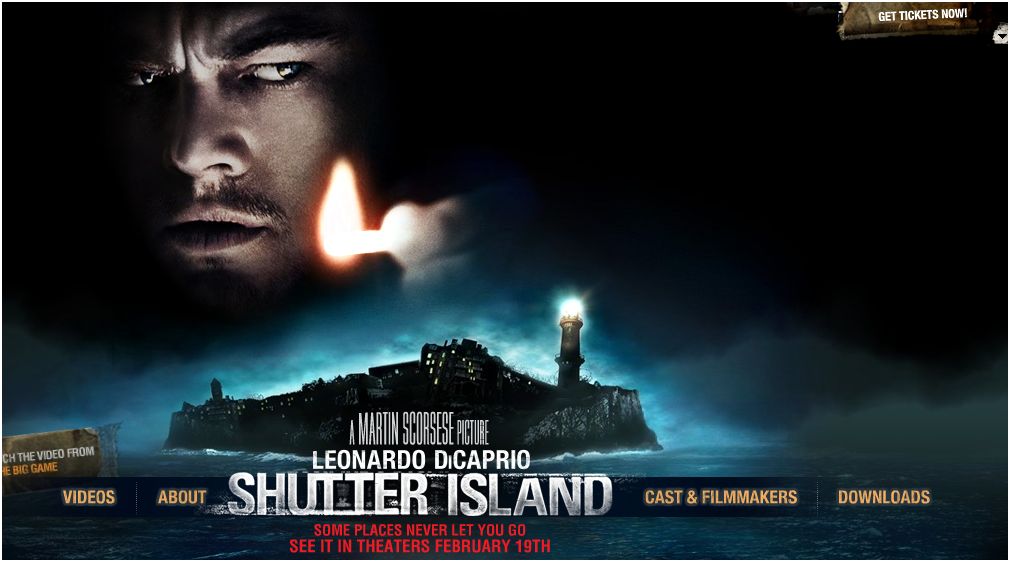
Lastly, I watched the opening of a very recent film, 'Shutter Island', with the genre of psychological thriller, mystery and drama. The opening of this film presents the encounter of two of the main characters who are partners heading towards Shutter island. The establishing shot is of a boat on the misty sea. The audience is then introduced to the main character of Teddy in the bathroom sink throwing up due to sea sickness in low-key lighting, This part of the opening is accompanied by the trombone or horn like music which creates a mysterious and tenses feeling as the opening scene, as well as continuing during the whole entire first scene. The camera shots and work also shows representation of the character as when we first see the main character it is a mid shot of the bottom half of his body. This shows his physical state as well as when he goes onto the deck of the boat to is partner, the camera is slightly tilted to create the feeling of seasickness. This shows the use of mis-en-scene because of the use of color/lighting to reflect on the state of the main character, as well as the camera work and the body language of the main character after he deals with his seasickness.
Lastly, I watched the opening of a very recent film, 'Shutter Island', with the genre of psychological thriller, mystery and drama. The opening of this film presents the encounter of two of the main characters who are partners heading towards Shutter island. The establishing shot is of a boat on the misty sea. The audience is then introduced to the main character of Teddy in the bathroom sink throwing up due to sea sickness in low-key lighting, This part of the opening is accompanied by the trombone or horn like music which creates a mysterious and tenses feeling as the opening scene, as well as continuing during the whole entire first scene. The camera shots and work also shows representation of the character as when we first see the main character it is a mid shot of the bottom half of his body. This shows his physical state as well as when he goes onto the deck of the boat to is partner, the camera is slightly tilted to create the feeling of seasickness. This shows the use of mis-en-scene because of the use of color/lighting to reflect on the state of the main character, as well as the camera work and the body language of the main character after he deals with his seasickness.

No comments:
Post a Comment